
Chisago County Arrest Warrants Explained
An arrest warrant is an order from a judge. It tells an officer to take someone into custody on a charge. In Chisago County, the District Court in Center City issues it after reviewing a sworn complaint, so a police decision alone never becomes a warrant. A detective can document an investigation for weeks. Only a judge's finding of probable cause turns that charge into arrest authority. That is the line that matters here.
Chisago County Arrest Warrant Complaints
Chisago County complaint forms follow one shape. The sequence below traces the process itself, never one real case.
- An agency or prosecutor prepares a complaint describing the alleged offense and the facts behind it.
- The complaint lists the charge, the statute, the offense level, the offense date, and a control number.
- The complainant signs the factual statement, and the prosecuting authority presents the complaint.
- A judicial officer reviews the facts and makes a probable-cause finding on the record.
- The court issues a summons or a warrant and sets the command, the conditions, and the appearance timing.
Who Serves a Chisago Arrest Warrant
It depends on where the person is found. Chisago County has several agencies working inside it, and each one keeps its own records on the cases it handles.
| Serving Agency | Local Role | Records Held |
|---|---|---|
| Chisago County Sheriff | Countywide service, jail, court security, contract policing | Sheriff reports and service records |
| North Branch Police | Independent city department, county dispatched | City incident records |
| Wyoming Police | Independent city department, county dispatched | City incident records |
| Lakes Area Police | Serves Chisago City and Lindstrom | Shared agency records |
| Court security deputies | Arrests made in the courthouse on remand | Courthouse custody events |
| U.S. Marshals Service | Federal warrants and task-force work | Federal records only |
Any officer can make the arrest. The Chisago County case still belongs to the District Court, where the file began.
Inside a Chisago County Arrest Warrant
These fields appear on Chisago County forms. Not every public record shows them all. Treat a sample as a blank form, never as a real case with a real person's details attached.
| Case Number | District, case type, year, and sequence, as in 13-CR-25-182 |
|---|---|
| Count and Statute | The charge, its statutory citation, and the offense level |
| Offense Date | The date alleged in the complaint |
| Control Number | An agency incident and control identifier used in reports |
| Probable Cause | The factual statement and the judicial finding on it |
| Warrant Command | The direction to the Sheriff or another authorized officer |
| Execution Terms | Geographic scope, time-of-day language, and detention conditions |
| Return of Service | The officer's record of execution after the warrant is served |
Chisago County Arrest Warrant Execution Rules
Where can a Chisago County warrant be served? The document itself answers that. Some authorize service only inside Minnesota. Others extend to border states, and some carry nationwide language when a judge orders it. Geography is set case by case, not by a countywide rule. Timing language sits in the same document. The county's sample directs that the person be presented promptly after arrest, with a no-later-than limit measured in hours or by the next available judicial officer. Read that as the specific document's terms, never as a promise about release or processing.
Serving Arrest Warrants in Chisago County
Once issued, a warrant enters the state criminal-justice network. Any officer who finds the person can act. Chisago County deputies, contract-service deputies, the three city departments, the State Patrol, and other authorized peace officers may all serve one, depending on where the person is and what the order says. Court security is separate work. Deputies assigned to the Government Center enforce court orders and take people into custody when a judge remands them in the courthouse. That work happens at 313 N Main Street in Center City, not at the jail. Two doors, in effect, for two jobs. The county's non-emergency line gives direction. Note: 911 stays reserved for emergencies.
Chisago County Arrest Warrant Service Status
A complaint or warrant sitting on an official county server can be years old. Maybe the warrant was served that same week. Maybe a judge recalled it later. Reading the paper as current status cuts both ways, so treat any Chisago County copy as a lead to verify, not the answer.
Caution: A public document shows what was filed, not what is true today. Only the court or the serving agency can confirm current status.
Two access rules sit behind that caution. Minnesota does publish arrest data in defined categories. The arrest-warrant index, though, stays confidential until custody, service, or a court appearance, under section 13.82. A records request for one arrest or service record can still be answered, but classification decides how much of the Chisago County file you get.
Chisago County Arrest, Summons, Bench Warrants
Three Chisago County court processes look alike on paper. They behave very differently in the field, and this comparison is the one readers ask about most.
| Comparison Point | Arrest Warrant | Summons | Bench Warrant |
|---|---|---|---|
| Authority | Authorizes custody on a charge | Orders an appearance, no custody | Enforces a missed court obligation |
| Who starts it | A complaint and probable-cause review | A charging decision without custody | A missed date, payment, or condition |
| Typical result | Arrest, booking, first appearance | Appearance on the scheduled date | New date, payment, or recall motion |
| Public listing | None published in Chisago County | None | None published in Chisago County |
A fourth category, the sign-and-release warrant, sits apart. Minnesota's statute keeps it from authorizing an arrest in the situations it covers.
Chisago County Arrest Warrant Records Requests
Need paper rather than a status answer? Request existing records from the agency that holds them. The Minnesota Government Data Practices Act guarantees the public a right to inspect public data, and it lets an agency classify or redact what the law protects. That split shapes most Chisago County responses.
- Decide which custodian holds the record: the District Court, the Sheriff's Office, or a city police department.
- Describe the record precisely, such as an arrest report, a warrant service return, or a booking record.
- Add a date range and any case, citation, or control number that will help staff find it.
- Say whether you want to inspect the record, receive copies, or both, and ask about the cost.
- Send it to the Sheriff's Records Division at 651-213-6384 when the record is a Sheriff record.
Note: A request covers records that already exist. No agency has to build a new list for you. The state statute on arrest data and warrant indices draws the line between what must be released and what stays confidential. That statute decides most records questions in Chisago County.
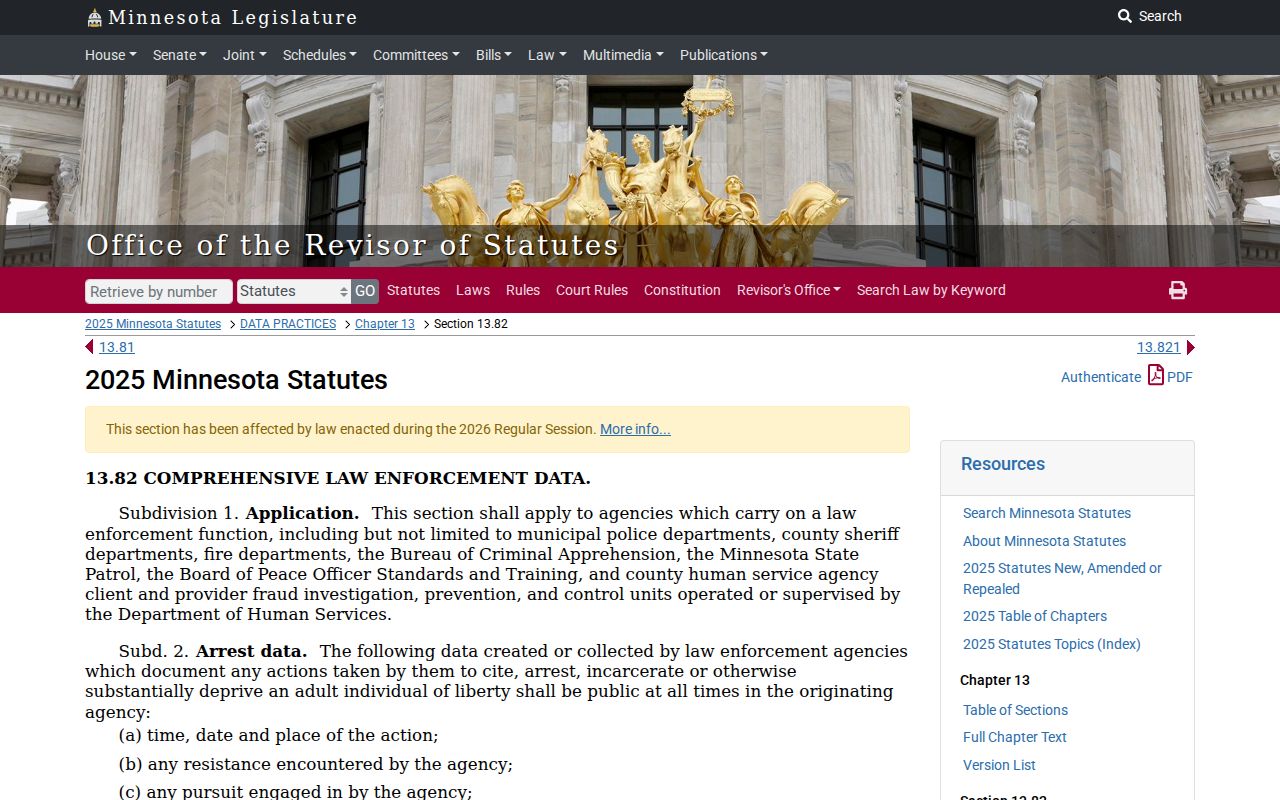
One subdivision keeps that index confidential. Until the defendant is in custody, has been served, or stands before the court, Chisago County cannot release it.
If a Chisago Arrest Warrant Names You
Call a lawyer first. Do not reach for a payment page. An attorney can read the complaint, explain the charge, and map the realistic choices: a voluntary appearance, a surrender arrangement, a bond question, or a motion asking the court to recall the Chisago County warrant. That call is the cheapest step you can take.
Important: An open Chisago County arrest warrant can be executed during any police contact. Ask a lawyer about timing before you turn yourself in.
Nobody can promise a same-day release. No one can quote a set bond. Chisago County publishes no universal bond schedule at all. If you are already in custody, ask jail staff about the next hearing and the public case documents. If you are not, talk with an attorney or Court Administration before acting.